
M&A TOOLS
How M&A Works: From Opportunity to Integration, Growth, and Long-Term Value
Structured tools and frameworks to help buyers navigate every stage of a merger or acquisition — from the first conversation to the last integration task.
Talk to UsSIX PHASES.
ONE CONNECTED PROCESS.
Opportunity Identification
Define what you are looking for before you start looking. Establish acquisition criteria — industry, size, geography, revenue, culture — so every opportunity can be evaluated against a clear standard.
- Define strategic acquisition criteria
- Build a target pipeline
- Screen for fit before investing time
- Prioritize based on strategic value
Due Diligence
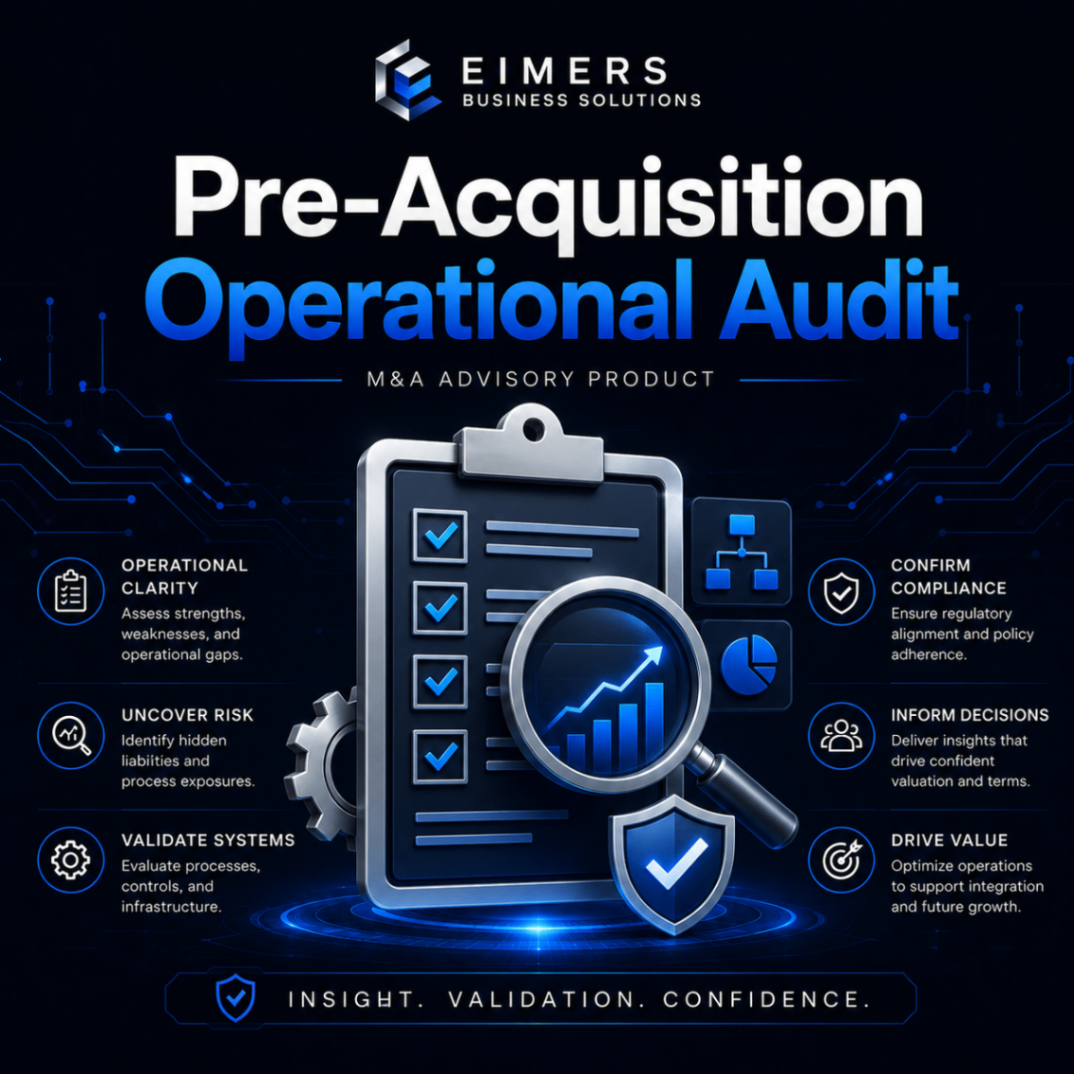
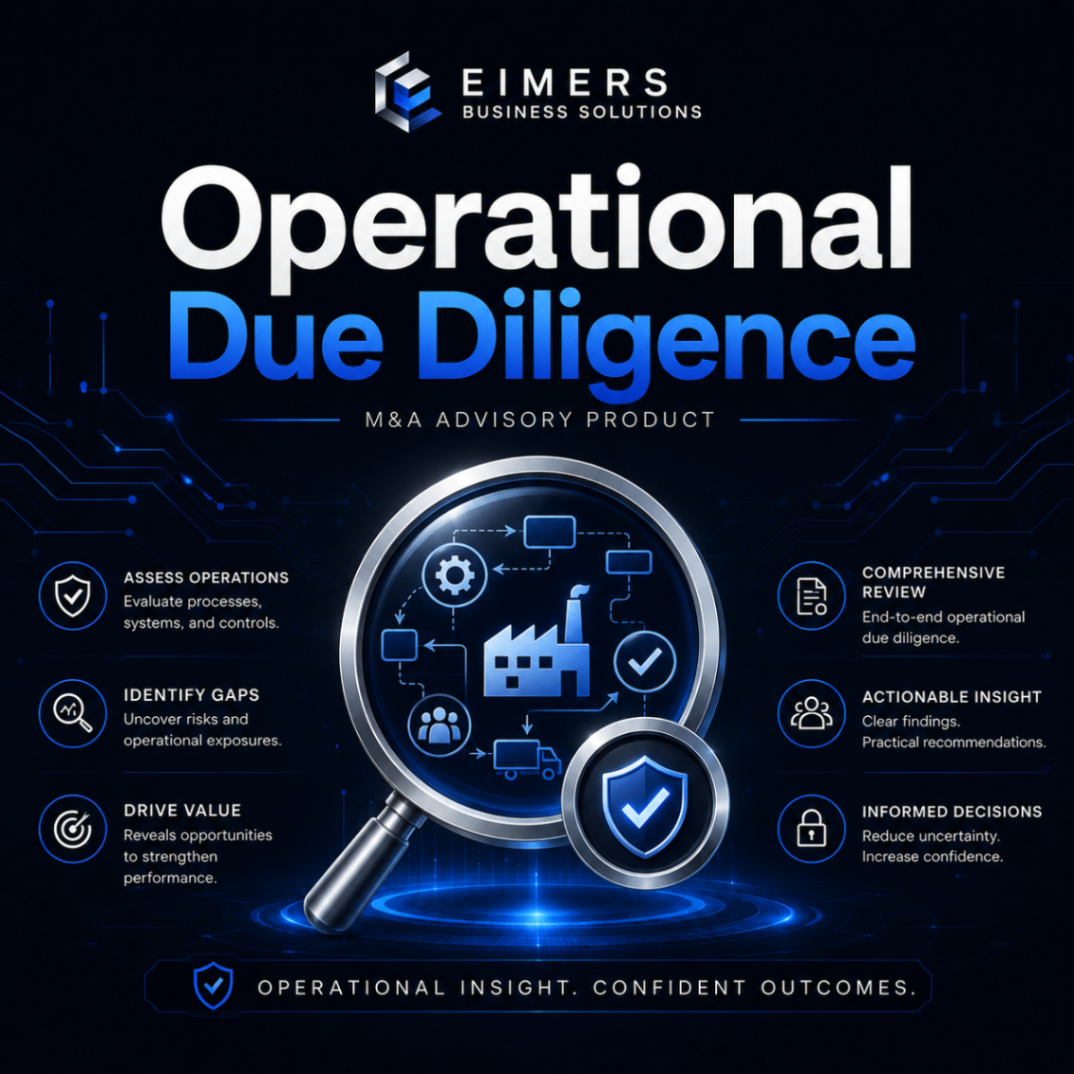
Understand what you are actually buying. Financial, operational, legal, and cultural due diligence surfaces the risks, liabilities, and hidden costs before the deal closes — not after.
- Financial statement review and normalization
- Operational process and systems assessment
- Legal, contract, and liability review
- Customer, vendor, and team analysis
Valuation and Deal Structure
Know what the business is worth and structure the deal to protect your position. Price, terms, earnouts, seller financing, and transition agreements all affect the real cost and risk of the acquisition.
- Business valuation and multiple analysis
- Deal structure and terms negotiation
- Earnout and contingency planning
- Risk allocation and protection clauses
Negotiation and Closing
Move from agreement in principle to a signed deal. Manage the LOI, purchase agreement, representations and warranties, and closing conditions with clarity and discipline.
- Letter of Intent (LOI) preparation
- Purchase agreement review and negotiation
- Representations, warranties, and indemnification
- Closing checklist and condition management
Integration Planning
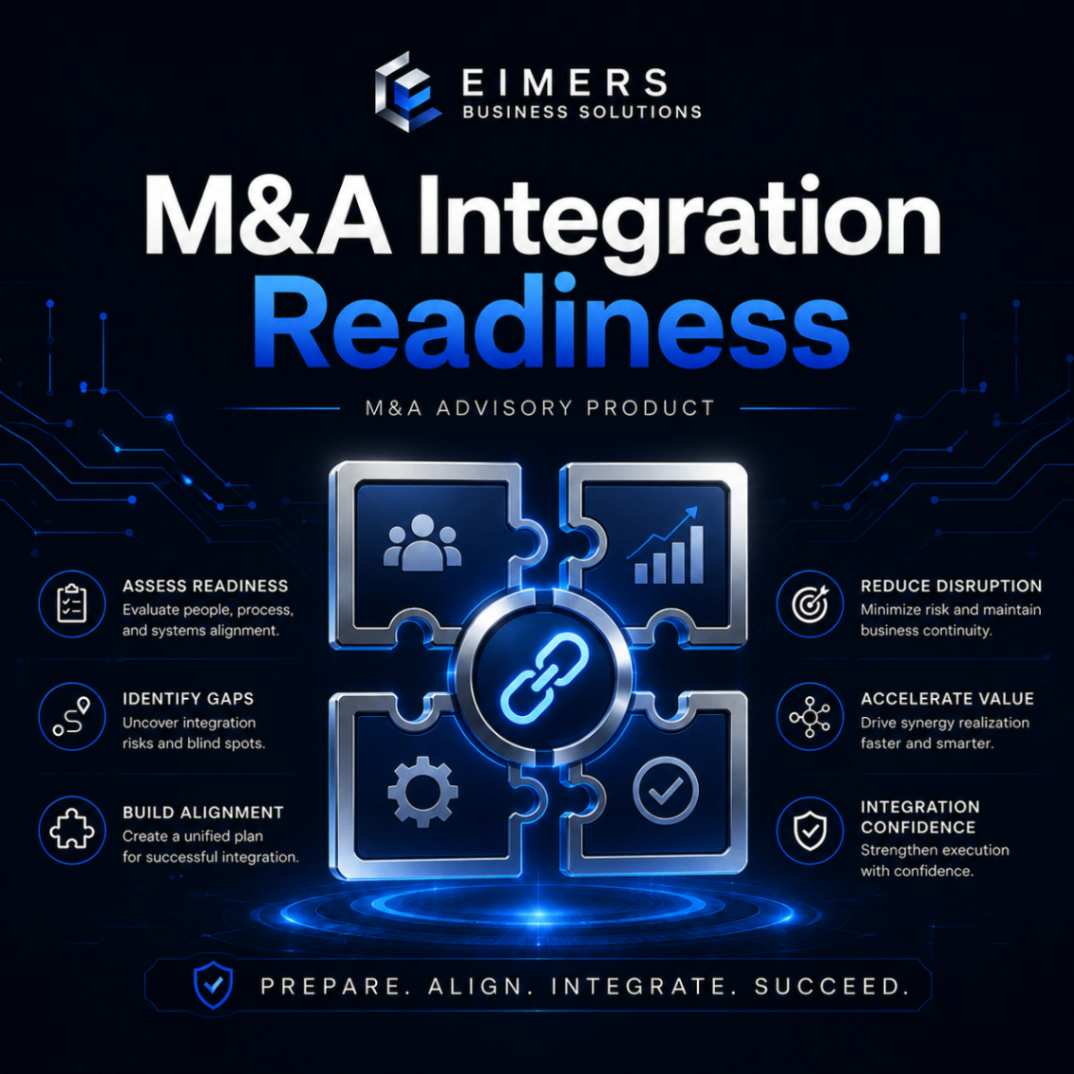
The deal closes on day one. The value is created over the months that follow. Integration planning starts before closing — covering people, systems, processes, customers, and culture.
- Day-one readiness planning
- People and team integration
- Systems and process consolidation
- Customer and vendor communication
Growth and Long-Term Value
Integration is not the finish line. The goal is to build a stronger, more valuable business. Track performance against acquisition thesis, capture synergies, and build the systems that support long-term growth.
- Performance tracking against acquisition thesis
- Synergy capture and reporting
- Operational improvement post-close
- Long-term value creation planning
TOOLS FOR EVERY
STAGE OF THE DEAL
Due Diligence Tracker
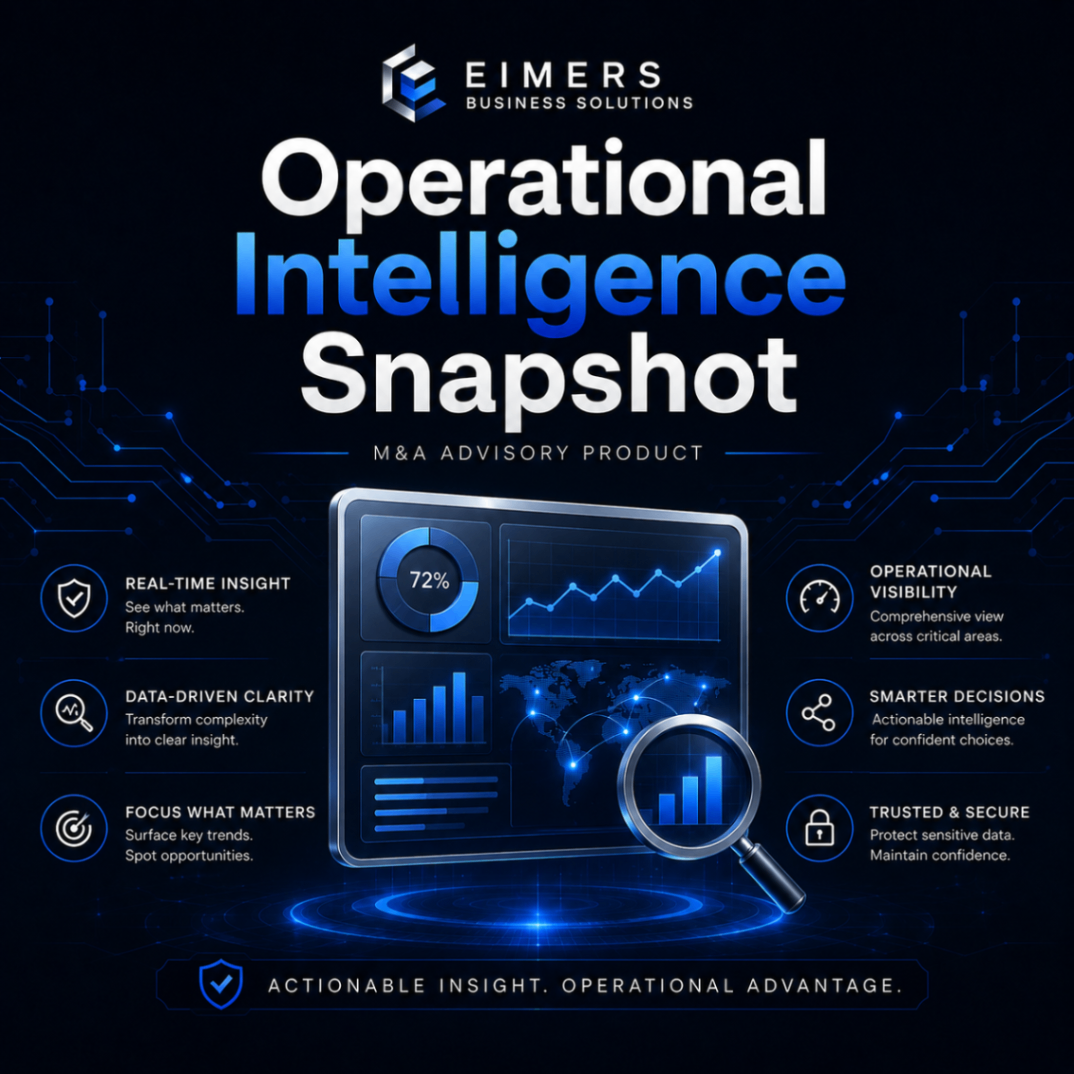
Organize every due diligence item — financial, legal, operational — with owners, status, and findings in one structured view.
Deal Pipeline Dashboard
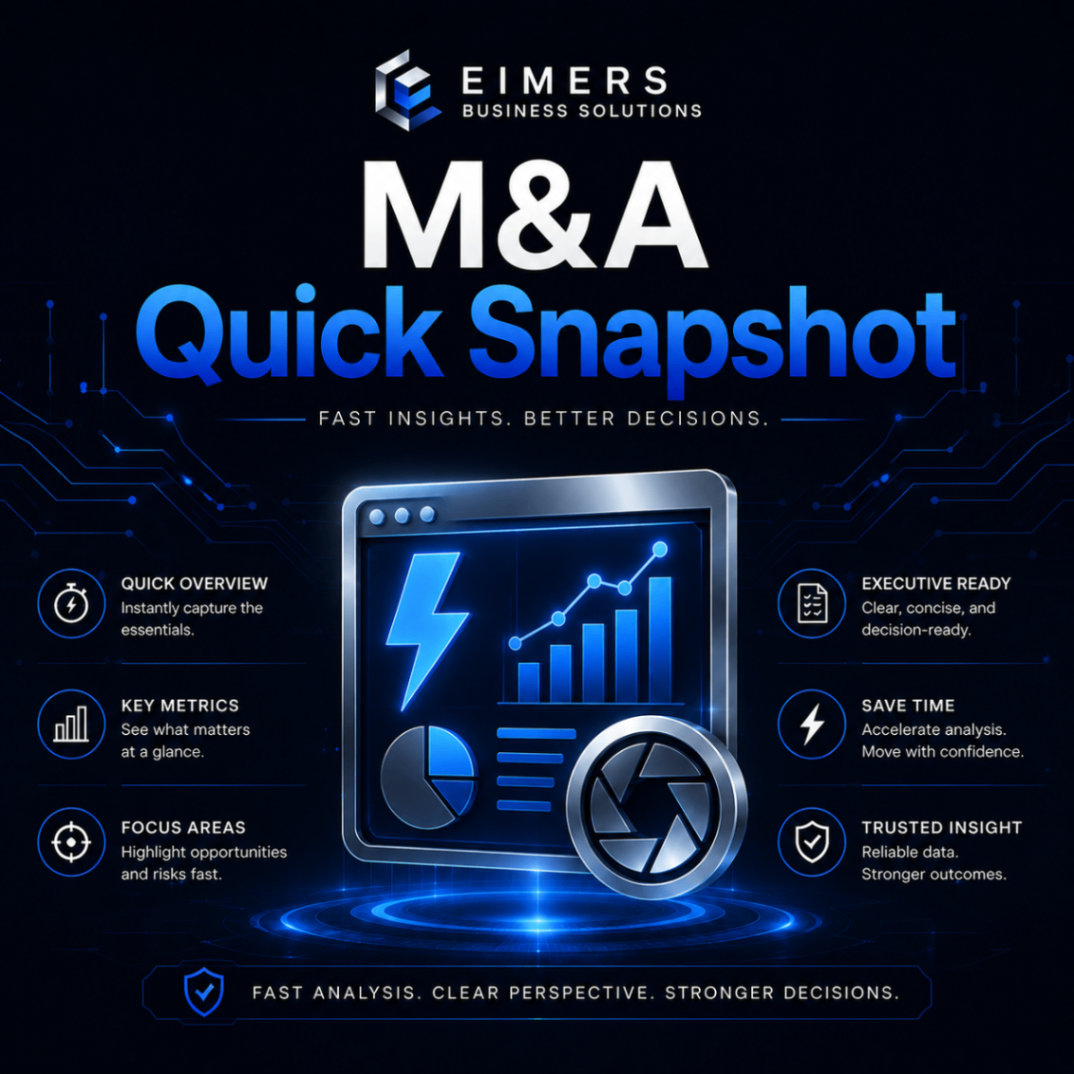
Track every active opportunity from first contact through close, with stage, status, and key metrics visible at a glance.
Document Request Manager
Manage the flow of documents between buyer and seller — what has been requested, what has been received, and what is outstanding.
Valuation Workbook
Normalize financials, apply valuation multiples, and model deal structures to understand the real cost and return of an acquisition.
Integration Task Manager
Assign and track every integration task across people, systems, operations, and customer relationships post-close.
Risk and Issue Log
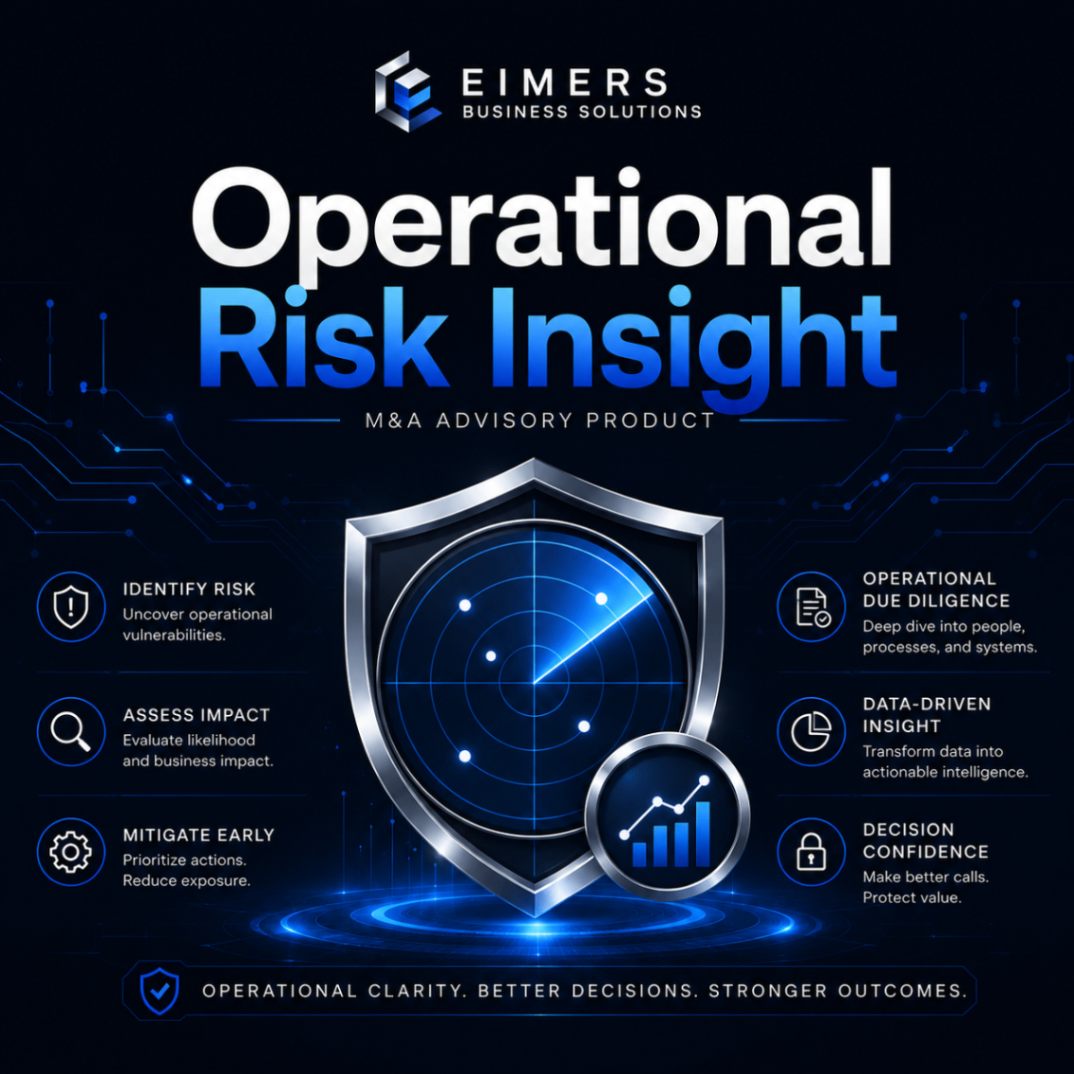
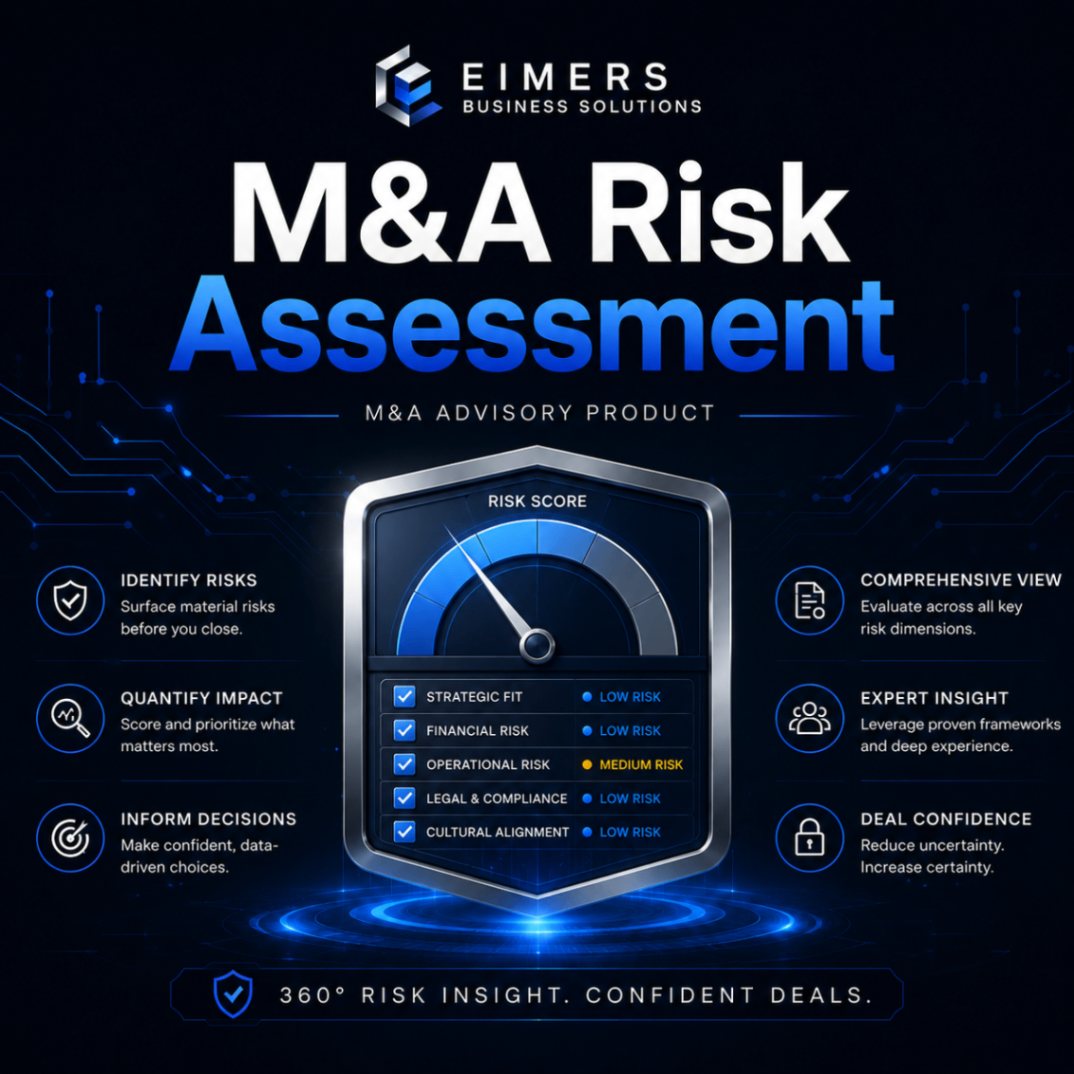
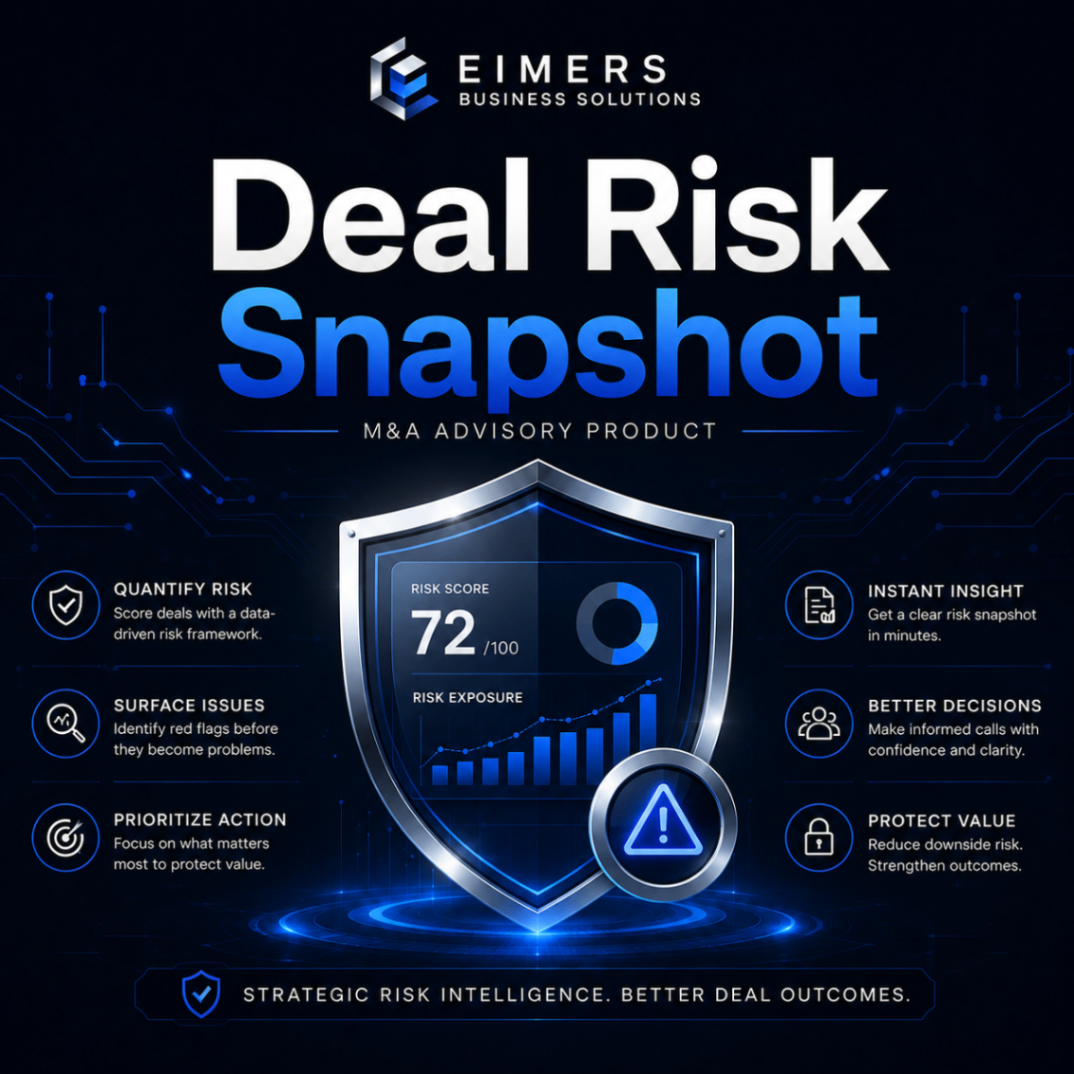
Capture risks identified during diligence, assign owners, track mitigation actions, and prevent issues from falling through the cracks.
Seller Communication Log
Document every conversation, commitment, and representation made during the deal process for accountability and reference.
Synergy Tracker
Identify, assign, and track synergy opportunities post-close — revenue, cost, operational — against projected and actual results.
MOST M&A VALUE IS LOST
AFTER THE DEAL CLOSES
Deals fail in the details
Most M&A value destruction happens post-close — from missed diligence items, poor integration planning, and unclear accountability. Structured tools prevent that.
Complexity demands organization
A single acquisition involves hundreds of moving parts across finance, legal, operations, and people. Without a system, things get missed.
The thesis must be tracked
You bought the business for a reason. Tracking performance against the acquisition thesis keeps the team focused on what actually creates value.
Integration is a team sport
Successful integration requires clear ownership, visible progress, and fast escalation of issues. That requires tools, not just intentions.
READY TO RUN A
SMARTER DEAL PROCESS?
Whether you are evaluating your first acquisition or managing a complex integration, let us help you build the structure that protects your investment and creates lasting value.